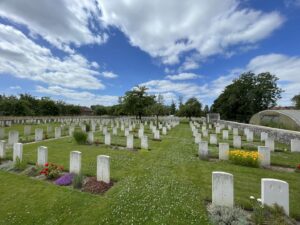


“Listen to the wraiths of morning in Flanders fields of grey,
Can you hear The Royal Sussex who came and went away
And linger still in graves unknown amidst the furrow and the thorn.
But never flinched, duty done, these sons of Sussex bred and born.”
This month we will remember the millions of lives lost and destroyed on the battlefields of World War One and in conflicts since. During the 1914-18 war – supposedly the war to end all wars – there were many unimaginable days of horror. One of the lesser known but darkest days of the conflict has become known as “The Day Sussex Died”.
Over the four years of the First World War there were more than 16 million civilian and military deaths – making it was one of the deadliest conflicts in the history of the human race. For Sussex, one particular infamous but often forgotten day stands out.

The Battle of the Boar’s Head was an attack on 30 June 1916 at Richebourg-l’Avoué north of the Somme. It was the day before the infamous main Somme offensive and members of the British Army, most of them members of the South Downs Battalions from the Royal Sussex Regiment, were told their objective was the nearby salient, a bulge in the line known as ‘The Boar’s Head’. It was to be ‘bitten out’.
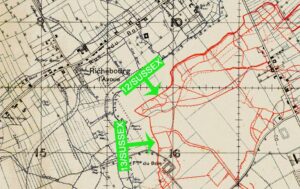
The 11th, 12th, and 13th battalions bore the unofficial title of ‘Lowther’s Lambs’, men of the South Downs who had joined up together to fight together and became part of the wider Royal Sussex Regiment. The Battle of The Boar’s Head would be their first real action in the war. For very many of them, it would also be their last.
The truth of the situation was this was really a diversionary raid designed to distract the Germans and draw them away from the preparations for the main Somme battle a day later.
Initial plans had been made which involved the 11th Battalion leading the attack, with the 12th Battalion on their right, and the 13th Battalion in reserve. When he saw the plans, Lt.-Col. Harman Grisewood, expressed serious misgivings that if his untried troops attacked over unfamiliar ground a disaster might result. He is reported to have informed his brigade commander: “I am not sacrificing my men as cannon-fodder!”
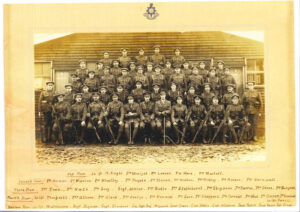
Harman Grisewood was promptly sent home on leave and the preparations for the attack continued.
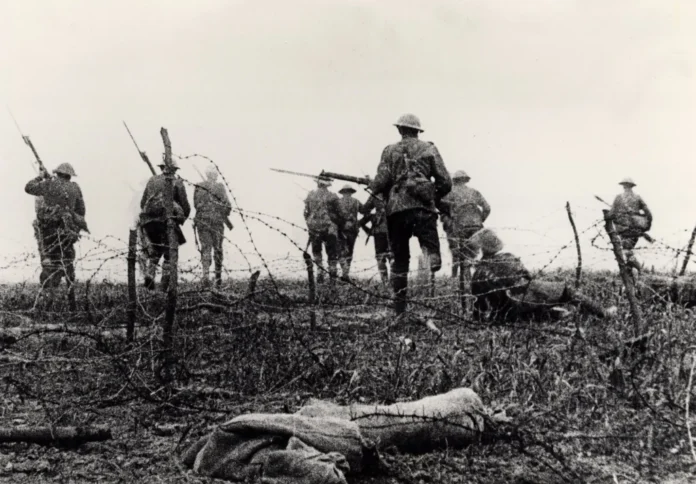
Two of the South Downs battalions, containing men recruited from across East and West Sussex, attacked the enemy front position before dawn. They expected to have surprise on their side, but sadly they were wrong. The Germans had known they were coming for several days and the artillery bombardment had had little effect on the German wire. As a result, the attack was a futile disaster.
Despite all the odds, heavily out-numbered, and suffering withering machine gun attack, the Sussex soldiers initially took and held the German front line trench and then the second trench for several hours. But running low on ammunition and facing a fierce German counter-attack the battalions eventually had no choice but to retire.
There is even a story that one man brought back a notice in English from the German lines, announcing: “Come on, Sussex boys. We’ve been waiting for you for three days!”
Following the short but hugely costly attack there were tales of great courage. Company Sergeant Major Nelson Carter from Eastbourne single-handedly captured a German machine gun post and used the weapon to cover the retreat before fleeing German trenches himself. He then repeatedly re-entered No Man’s Land to rescue wounded men and carry them to safety. On his final trip he was shot through the chest and killed. He was posthumously awarded the Victoria Cross for his bravery.
A fellow officer wrote the following to Carter’s widow: “When I last saw him he was close to the German line, acting as leader to a small party of four or five men. I was afterwards told that he had entered the German second line, and had brought back an enemy machine gun, having put the gun team out of action. I heard that he shot one of them with his revolver. I next saw him about an hour later (I had been wounded in the meanwhile and was lying in our trench). Your husband repeatedly went over the parapet. I saw him going over alone and carrying in our wounded men from ‘No Man’s Land’. He brought them in on his back, and he could not have done this had he not possessed exceptional physical strength as well as courage. It was in going over for the sixth or seventh time that the was shot through the chest. I saw him fall just inside our trench.”
Other awards for the South Downs included twenty Military Medals, eight Distinguished Conduct Medals, four military crosses and a Distinguished Service Order.
In fewer than five atrocious hours the three South Downs battalions of the Royal Sussex Regiment had 366 killed – 17 officers and 349 men, including 12 sets of brothers, three from one family. A further 1,000 men were wounded or taken prisoner. The 13th battalion was almost completely wiped out. No wonder in the regimental history it is known as “The Day Sussex Died”.
Returning from his enforced leave, Lt Col Harman Grisewood, who had been sent home for refusing to “sacrifice my men as cannon fodder” was relieved of command.
Of all the dark days of war, for Sussex this surely has to be the darkest.
They shall grow not old, as we that are left grow old:
Age shall not weary them, nor the years condemn.
At the going down of the sun and in the morning
We will remember them.